We act as a commercial plumber for many local and residential businesses
Water Heater Repair & Installation in Smyrna, GA
Hot water is an essential part of modern living. From a warm shower in the morning to running the dishwasher after dinner, your water heater works silently in the background to provide comfort and sanitation. When this system fails, it is immediately noticeable and highly disruptive. At Smyrna Plumbing Pros, we specialize in comprehensive water heater repair and installation services. We are dedicated to ensuring that the residents and businesses of Smyrna have reliable access to hot water year round.
Water Heater Repair and Installation in Smyrna, Georgia – Smyrna Plumbing Pros
Smyrna Plumbing Pros handles water heater repair, water heater replacement, new water heater installation, tankless water heater installation, tankless repair, gas water heater service, electric water heater diagnosis, and sediment flushing for homeowners throughout Smyrna, Georgia and the surrounding communities of Vinings, Mableton, Marietta, Austell, and Powder Springs. Whether your water heater is leaking, making loud noises, refusing to produce hot water, or simply aging out of reliable service, we diagnose the problem correctly and give you a straight answer about whether repair or replacement makes more sense for your situation. Mineral content in Smyrna area water accelerates sediment buildup in tank units, a problem that shortens equipment life and affects performance in ways homeowners often notice before they connect the dots. We work on both traditional tank systems and modern tankless units, and we understand the specific demands that Smyrna homes place on water heating equipment. We do careful diagnostic work before recommending anything, and we clean up thoroughly when we are done. Here is what we handle and how we approach each situation.
Common Water Heater Problems We Fix in Smyrna
No Hot Water or Insufficient Hot Water
Running out of hot water faster than you used to, or having no hot water at all, is one of the most disruptive water heater problems a household can face. In Smyrna, this situation often stems from a failed heating element in an electric unit, a tripped thermostat, or a gas burner issue. It can also indicate a tank that has reached the end of its useful life and simply can no longer meet the demand placed on it. When we see this problem in homes with older equipment, the water heater’s age is always part of the diagnostic conversation.
Recognizing the Problem
- Hot water runs out much faster than it used to, even with normal household use
- No hot water at any fixture in the house, despite the unit being on
- Hot water is lukewarm but never actually reaches a comfortable temperature
- Only one or two people can shower before the water turns cold
- Pilot light appears to be lit but the water is still cold
- Circuit breaker for the water heater trips repeatedly
- Hot water works fine in the morning but is gone by midday
We test each heating component individually to isolate where the failure is occurring. On electric units, that means checking both upper and lower elements and the thermostats controlling them. On gas units, we inspect the burner assembly, thermocouple, and gas valve function. Knowing exactly which component has failed lets us make a targeted repair when the rest of the unit is in good shape, and helps us make an honest case for replacement when the overall condition of the tank suggests another failure is likely soon.
Leaking Water Heater
A leaking water heater needs to be taken seriously right away. Water pooling around the base of the tank or dripping from connections at the top can mean anything from a minor fitting issue to a tank that is corroding from the inside and is close to failing completely. In Smyrna, where mineral deposits in the water accelerate internal corrosion over time, tank leaks in units older than eight or ten years are often a sign that replacement is the more sensible path than repair.
Recognizing the Problem
- Water pools around the base of the tank, even when you dry it and return later
- Water is dripping from fittings or supply lines at the top of the unit
- Pressure relief valve is releasing water intermittently
- Rust or mineral staining is visible on the exterior of the tank near the bottom
- Floor beneath the water heater is soft, warped, or discolored
- The tank makes a hissing sound when heating even without visible water
- Water has leaked into an adjacent cabinet or wall space near the unit
We identify exactly where the water is originating before drawing any conclusions. A leak from a supply line fitting at the top is very different from a seam leak at the bottom of the tank. Fitting leaks are often a straightforward repair. Tank seam leaks or corrosion at the base typically indicate that the tank itself is failing, and in those cases we walk the homeowner through replacement options clearly so they can make an informed decision rather than investing in a unit that will fail again soon.
Tankless Water Heater Issues
Tankless water heaters are more efficient than tank units and last longer on average, but they have their own set of problems that require specific knowledge to diagnose. Error codes, inconsistent water temperature, cold water sandwiching between bursts of hot water, and units that ignite but do not sustain are among the most common tankless complaints we address in Smyrna. Mineral scale buildup on the heat exchanger is also a significant issue in this area given the water mineral content, and it directly affects performance over time.
Recognizing the Problem
- Tankless unit displays an error code that did not clear after a reset
- Water temperature fluctuates unpredictably during a single shower
- Unit ignites but hot water only lasts a short time before going cold
- Cold water comes through briefly in the middle of a hot shower
- Unit works at low flow but shuts off or struggles at higher demand
- Venting area shows signs of moisture or unusual odor when the unit runs
- Unit is making clicking sounds repeatedly without successfully firing
Tankless diagnostics start with reading and interpreting the error code correctly, since different manufacturers use different code systems and the same code number can mean different things across brands. We descale heat exchangers using the correct descaling procedure for the unit, check gas pressure and flow rate, inspect ignition components, and verify venting is clear. In Smyrna, we recommend annual descaling on tankless units given local water conditions, as this is the single most effective way to extend the life of the heat exchanger.
Rusty or Discolored Hot Water
Hot water that comes out rust-colored or brownish is alarming and usually traceable to one of two sources: corrosion inside an aging tank, or a deteriorating anode rod that is no longer protecting the tank interior. The anode rod in a water heater is a sacrificial metal component designed to corrode in place of the tank lining, and when it is depleted, the tank itself begins to rust. In Smyrna homes with older tank water heaters, discolored hot water from the tap is often the first visible sign that the unit is past its protective period.
Recognizing the Problem
- Hot water from faucets appears rust-colored or brownish, especially first thing in the morning
- Discoloration appears on the hot side only, not from cold water fixtures
- Clothes washed in hot water are coming out with faint staining
- Hot water has a metallic or sulfur-like smell that was not there before
- Water heater is over eight years old and has never had the anode rod inspected
- Sediment or grit is coming through when you run hot water
- Discoloration worsens after the unit has been off for a period and then reheated
Rusty hot water requires a careful diagnosis to determine whether the source is the tank, the anode rod, or aging galvanized pipes in the home’s hot water supply lines. We isolate which it is before recommending a fix. An anode rod replacement in a tank that is otherwise in good condition is a reasonable repair. A tank that is corroding internally is a replacement situation, and we explain that clearly with the evidence we find during inspection.
Strange Noises from Water Heater
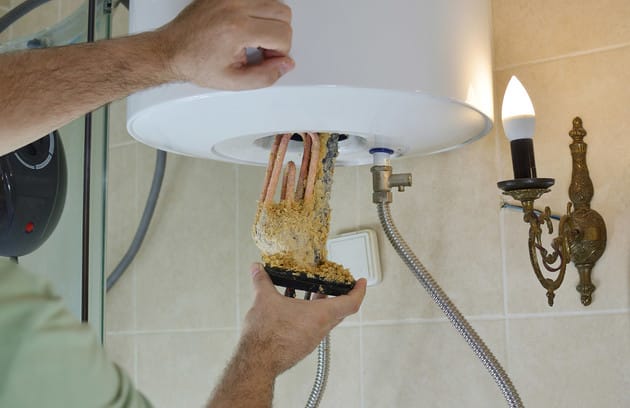
A water heater that pops, rumbles, bangs, or hisses during heating cycles is usually telling you something specific. Sediment accumulation at the bottom of the tank is the most common cause of the loud rumbling and popping sounds that many Smyrna homeowners describe. As water heats beneath a layer of hardened mineral deposits, it creates those sounds as steam bubbles through the sediment layer. The noise itself is not immediately dangerous, but what it represents is a unit working harder than it should and accumulating internal damage.
Recognizing the Problem
- Loud popping or rumbling sounds during the heating cycle that were not there when the unit was new
- High-pitched hissing that occurs intermittently when the unit is heating
- Banging sound from inside the tank when hot water demand suddenly increases
- Unit sounds like it is boiling aggressively even at a standard temperature setting
- Noise has gradually gotten louder over the past year or two
- Knocking or clicking sounds near the base of the unit during heating
- Sounds are accompanied by longer heating cycles than before
Sediment flushing is the first step for a noisy tank that is otherwise in reasonable condition. We drain the tank, flush accumulated sediment, inspect the elements or burner, and refill to check if the noise resolves. In Smyrna, where mineral content in the water contributes to faster-than-average sediment buildup, annual or biannual flushing can significantly extend tank life. If sediment has been accumulating for years without service, the tank lining may already be compromised and flushing may not be enough.
Pilot Light Problems (Gas Water Heaters)
A gas water heater pilot light that won’t stay lit is a frustrating problem that usually points to one of a few specific components. The thermocouple, which is the safety device that senses whether the pilot is burning and keeps the gas valve open, is the most common culprit when a pilot lights briefly but then goes out when you release the ignition button. A dirty pilot tube that is obstructed by debris can also prevent a stable flame. These are diagnosable problems with specific fixes.
Recognizing the Problem
- Pilot lights when you hold the button but goes out within seconds of releasing it
- Pilot will not ignite at all despite following the relighting procedure
- Pilot flame appears very small, yellowish, or irregular rather than a clean blue flame
- Unit shuts off completely and will not relight without a service call
- Pilot was accidentally extinguished and will not respond to standard relighting steps
- Draft from a nearby air vent seems to affect pilot stability
- Unit is older and the igniter makes no click or spark when activated
We test the thermocouple output with a meter to determine whether it is generating the millivolts needed to hold the gas valve open, and we inspect the pilot tube and orifice for any obstruction. Thermocouple replacement is a straightforward repair on most gas water heater models. If the gas valve itself is failing, we evaluate whether valve replacement makes economic sense relative to the overall age and condition of the unit.
If you smell gas or suspect a gas leak, go outside immediately and call 911 – this is a serious emergency that needs urgent attention from the gas company.
Water Heater Not Turning On
A water heater that does not respond at all, no heating, no pilot, no indicator lights on an electric unit, requires a systematic check of everything from the power supply to internal safety switches. Electric water heaters have high-temperature cutoffs that trip to protect the unit when it overheats, and these require a manual reset that homeowners sometimes do not know exists. Gas units have their own safety lockout conditions that can prevent startup after a gas interruption or extended period without use.
Recognizing the Problem
- No hot water and the water heater makes no sound at all when you expect it to be heating
- Circuit breaker for the water heater is tripped and keeps tripping after reset
- Electric unit has no indicator light and does not respond to thermostat adjustment
- Gas unit will not respond to the ignition sequence even after waiting the recommended time
- Unit was working normally and then simply stopped without any obvious event
- Power was recently interrupted to the home and the water heater did not resume
- Control panel on a tankless unit is completely blank
We follow a logical diagnostic sequence starting from the power source, checking the disconnect, breaker, and wiring before moving to internal components. On gas units, we check the gas supply valve position, the incoming gas pressure, and the control valve. A water heater that keeps tripping the breaker after reset is telling us there is a short or a failed element that needs to be addressed before the unit is put back in service.
Sediment Buildup and Poor Performance
Sediment buildup is a gradual process that happens in virtually every tank water heater, but it accelerates significantly in areas with harder water. Smyrna’s water supply carries enough mineral content that tank sediment becomes a real performance issue in units that are not serviced periodically. The effects build slowly, higher energy consumption, longer heating times, reduced hot water capacity, and more frequent noise, until the homeowner notices something is clearly wrong.
Recognizing the Problem
- Energy bills have increased without a clear change in household usage
- Hot water capacity seems smaller than it used to be
- Heating cycle seems to run much longer than it did when the unit was newer
- Noises during heating have gotten progressively louder over the past year
- Small amounts of sandy sediment are visible when running hot water into a white bowl
- Hot water temperature is inconsistent even when the thermostat setting has not changed
- Unit is three or more years old and has never been flushed
Sediment flushing is a straightforward maintenance procedure when done before buildup becomes severe. We attach a hose to the drain valve, flush the tank fully, and inspect what comes out to assess the degree of accumulation. For tanks with heavy calcification at the bottom, we assess whether the sediment layer has begun to affect the tank lining or heating element directly. Regular flushing every one to two years in Smyrna area homes is the best way to keep tank performance consistent and extend equipment life.
Water Heater Repair vs Replacement in Smyrna
One of the most common questions we hear from Smyrna homeowners is whether to repair or replace a failing water heater. It is a reasonable question, and the answer is not the same for every situation. We give homeowners a straightforward assessment based on the actual condition of the unit, its age, and the nature of the failure.
Repair makes sense when the unit is under eight or nine years old, the problem is isolated to a specific component that is not expensive relative to the cost of a new unit, and the overall condition of the tank interior is sound. A failed thermocouple on a four-year-old gas water heater is a clear repair situation. A failed heating element on a six-year-old electric unit with a healthy tank is another.
Replacement starts to make more sense when the unit is ten years old or older, when tank corrosion or internal rust is evident, when the repair cost approaches or exceeds half the cost of a new unit, or when the same component has failed more than once. An older tank water heater that is leaking from the seam at the base is a replacement, because a seam leak means the tank wall itself is failing, and no fitting or valve repair changes that.
For Smyrna homeowners with older homes, the replacement decision often also involves a choice between replacing like-for-like with a new tank unit or upgrading to a tankless system. Tankless units cost more upfront but last significantly longer, use energy only when hot water is demanded rather than continuously maintaining a tank, and eliminate the risk of tank failure flooding a utility room. We walk homeowners through this comparison honestly, including the additional gas line or electrical work that a tankless conversion sometimes requires, so the decision is made with full information rather than a sales pitch.
The bottom line is this: we tell you what we found, what the realistic options are, and what we would do in your situation. The decision is always yours.
Tankless Water Heater Installation and Repair
Tankless water heaters have become a popular choice in Smyrna homes, particularly for households that have outgrown the hot water capacity of their current tank unit or that want to reduce energy consumption. We install and service tankless units from multiple manufacturers and handle everything involved in a proper installation, including gas line sizing, venting configuration, and electrical requirements.
A tankless unit heats water on demand rather than storing it, which means it never runs out as long as the flow rate stays within the unit’s capacity. For a typical Smyrna household with two or three bathrooms, a properly sized whole-home tankless unit handles simultaneous demand without issue. Sizing the unit correctly for the home’s actual hot water demand is one of the most important steps in a successful tankless installation, and it is something we do based on the number of fixtures, the expected simultaneous use, and the incoming water temperature from the supply.
Existing gas water heater connections are often not sized correctly for a tankless unit, which requires a higher BTU burner and therefore a larger gas line. We assess the current gas line capacity as part of every tankless conversion and make whatever upgrades are needed so the unit performs to its specifications. Venting also changes with a tankless installation, as most units require a two-pipe direct vent system rather than the flue venting used with traditional tank heaters.
For homeowners already running a tankless unit that is underperforming, annual descaling is the most important maintenance step. Scale on the heat exchanger reduces efficiency and eventually causes permanent damage to the component. We perform descaling service in Smyrna and walk homeowners through what a maintenance schedule should look like based on their water conditions and usage.
Water Heater Installation Services in Smyrna
Whether you are replacing an existing unit or installing a water heater in a new space, the installation process involves more than setting the unit in place and connecting the pipes. We handle every step from start to finish.
For traditional tank replacement, we disconnect and remove the old unit, inspect the supply lines and shutoff valves for any corrosion or wear, install the new unit with properly sized connections, check the pressure relief valve and expansion tank if required by local code, and run the unit through a full heating cycle before we leave. We also confirm the temperature setting is appropriate for the household before the job is finished.
For new tankless installations, the process includes gas line sizing and any necessary upgrade, venting design and installation, electrical connection if the unit requires it, programming the unit’s control system to the household’s preferred temperature settings, and confirming that the flow rate and temperature output are correct at multiple fixtures throughout the home.
We also handle water heater installations in condos and apartment units in Smyrna, where space constraints, shared walls, and building-specific venting requirements add complexity that requires experience with those types of installations specifically.
Why Smyrna Homeowners Choose Smyrna Plumbing Pros for Water Heater Service
Local Expertise with Smyrna Homes and Water Conditions
The mineral content of Smyrna area water affects water heaters in ways that vary by unit age, tank material, and how consistently the unit has been serviced. We know this from firsthand experience working on water heaters throughout the community. When we arrive at a Smyrna home with a ten-year-old tank water heater that has never been serviced, we have a realistic picture of what we are likely to find before we even open the unit. That context allows us to diagnose efficiently and set accurate expectations for the homeowner about repair versus replacement from the start.
Meticulous Diagnostics and Root-Cause Fixes
We do not replace parts randomly hoping something sticks. Every diagnosis starts with a systematic check of the components involved in the specific failure symptom, and we use the right testing tools to confirm a component has actually failed before recommending replacement. A homeowner called us after another company replaced the upper heating element on their electric water heater and the problem persisted. We tested the lower element and thermostat and found a failed lower thermostat that had been missed. Replacing it solved the problem completely. Accurate diagnosis is the foundation of a repair that actually lasts.
Respect for Your Home and Family During the Job
Water heater replacement in a tight utility closet or a finished basement requires care to avoid damaging flooring, walls, and trim during removal and installation. We use drop cloths and floor protection, remove the old unit without dragging it across finished surfaces, and clean up any water that spills during the draining and disconnect process. We also make sure the space is left clean and organized the way we found it. The homeowner should not be able to tell we were there except that their water heater works.
Skilled with Both Traditional and Tankless Systems
We work comfortably on traditional tank units and modern tankless systems from major manufacturers. Tankless water heaters are not something every plumber is equally experienced with, because they involve gas line sizing, specific venting requirements, and electronic controls that differ by brand. A homeowner who wanted to install a tankless water heater to replace a large tank unit in their Smyrna home needed an upgraded gas supply line and a new vent run through an exterior wall. We assessed, planned, and completed the full installation in a single visit, and the unit has performed exactly as expected since.
Fast Same-Day Response When You Need Hot Water Now
A household without hot water is a genuine disruption, especially with young children, elderly family members, or anyone on a work or school schedule. We treat no-hot-water calls in Smyrna with the urgency they deserve and work to fit same-day service into our schedule whenever possible. For water heater failures that require replacement, we come prepared with common tank sizes and the hardware needed for most installations so we are not making a second trip for parts when the first visit could have been the only one.
Our Water Heater Service Process in Smyrna
1. You Reach Out
Tell us what you are experiencing and we will ask a few questions to understand the situation before scheduling a visit. Whether it is no hot water, a leak, strange noises, or a tankless system displaying an error code, we use what you share to come prepared with the right tools and the right parts for the most likely diagnoses.
2. We Schedule and Arrive
We set a realistic appointment window and communicate before we arrive. For same-day calls, we update you on our timing throughout the day. We do not leave you waiting without information about when to expect us.
3. Thorough Diagnosis and Clear Explanation
We inspect the unit systematically and test the components relevant to the symptom you described. Before we recommend anything, we explain what we found and why we are suggesting what we are suggesting. If repair makes sense, we explain that. If replacement is the more honest recommendation, we explain that too, with the specific reasons that apply to your unit.
4. Repair or Installation
We complete the repair or install the replacement unit, including all connections, fittings, venting, and any associated work like gas line sizing or expansion tank installation. We do not cut corners on the associated work because the water heater itself is only part of what determines long-term performance.
5. Final Testing and Cleanup
We run the unit through a full cycle, confirm hot water is reaching fixtures at the right temperature, check every connection for leaks, and inspect the surrounding area for any moisture. We clean up the work space, remove the old unit if it is a replacement, and make sure the homeowner understands the basic operation and maintenance of whatever equipment we installed or repaired.
Water Heater Service Area in and Around Smyrna, Georgia
We provide water heater repair and installation throughout Smyrna and the surrounding Cobb County communities. Whether you are in an older Smyrna neighborhood where tank water heaters have been working hard for decades, a newer development where tankless systems are being installed for the first time, or a condo near the Cumberland area, we are familiar with your type of home and the specific installation considerations that apply.
- Smyrna
- Vinings
- Mableton
- Marietta
- Austell
- Powder Springs
- Kennesaw
- Acworth
- Clarkdale
- Fair Oaks
Local water heater service in Smyrna means a technician who understands the specific water conditions here, the housing stock across different neighborhoods, and the permitting and installation standards that apply in Cobb County. We are not sending someone unfamiliar with the area who treats every job as a generic task. We bring local experience to every water heater call in Smyrna and the surrounding communities.
Professional Water Heater Repair vs DIY Attempts
Water heaters involve a combination of factors that make DIY repairs more hazardous than many homeowners realize. Gas units involve combustion and a live gas supply. Electric units operate at 240 volts with high amperage draws. Both involve pressurized water and high-temperature components. Each of these individually is manageable with the right knowledge and tools. Together, they create a situation where a mistake in one area can create a cascading problem in another.
Gas water heater work is particularly important to approach carefully. Improperly seated connections, cross-threaded fittings, or gas valve replacements done without proper pressure testing can result in slow gas leaks that are not immediately detectable but create dangerous conditions over time. Venting errors on gas units, whether by using incorrect vent pipe, running venting in the wrong direction, or failing to seal joints properly, can allow combustion gases including carbon monoxide to re-enter the living space.
Electric water heater repairs require shutting off the breaker and confirming the circuit is dead before touching any wiring or components. An element replacement done with the power still on carries the risk of serious electrical injury. Even with the power off, the wiring inside an older electric water heater can be in poor condition and should be evaluated carefully before any connections are disturbed.
Sediment flushing on a tank water heater involves draining a tank full of very hot water through a hose to an appropriate drain. Done incorrectly, it can result in burns, water damage from an improperly routed drain hose, or a seized drain valve that will not close again after the flush is complete.
Tankless water heater diagnostics and descaling require following manufacturer-specific procedures and using the correct descaling solution. Using the wrong chemical or connecting the descaling equipment incorrectly can damage heat exchanger materials and void the manufacturer support for the unit.
These are all manageable risks with the right training and tools. The reason to call a professional is not that these tasks are impossible, it is that the consequences of an error are significant enough that the peace of mind from having it done correctly is worth it.
Plumbing Pro Services
Complete Plumbing Care for Your Entire Home
Whether it’s the kitchen, bathroom, or sewer line, we have the tools and training to handle any challenge your plumbing system throws at us.
We Deliver Expert Results
Don’t gamble with your plumbing. We combine years of experience with modern technology to deliver lasting repairs and installations. Our team respects your time and your property.
- Fixture Installation
- Leak Detection
- Modern Diagnostics
- Drain Cleaning
Frequently Asked Questions About Water Heater Repair and Installation in Smyrna
Water heater repair in Smyrna?
Yes, Smyrna Plumbing Pros handles water heater repair throughout Smyrna and nearby communities. We work on gas and electric tank units as well as tankless systems. Same day service is often available, especially for no-hot-water situations. We diagnose the problem first and give you a clear picture of what the repair involves before any work begins.
How much does water heater replacement cost in Smyrna?
The total for a water heater replacement in Smyrna depends on the type of unit being installed, the size, whether it is a tank or tankless system, and what associated work is needed, such as gas line adjustments, new venting, or expansion tank installation. We assess the full scope during the diagnostic visit and explain what is involved before any work begins. There are no surprises added after the fact.
Do you install tankless water heaters?
Yes. Tankless water heater installation is a regular part of what we do in Smyrna. We handle everything involved, including gas line sizing, venting, electrical connection, and unit configuration. If you are considering a switch from a tank unit to a tankless system, we can evaluate your home’s current gas supply and venting during a diagnostic visit and walk you through what the conversion involves before you commit to anything.
What should I do if I have no hot water?
Check whether the circuit breaker for an electric water heater has tripped, or whether the pilot light on a gas unit has gone out. If the breaker has tripped, reset it once and see if it holds. If it trips again, do not reset it a second time. For a gas unit, follow the manufacturer’s relighting instructions printed on the unit. If neither approach restores hot water, contact us and we will diagnose the problem on a same-day or next-available basis.
How long does water heater installation take?
A straightforward tank water heater replacement in Smyrna typically takes two to three hours from the time we arrive. Tankless installations take longer, usually half a day, depending on the complexity of the gas line and venting work involved. We give you a realistic time estimate when we schedule the job so you know what to plan for.
Do you work on older homes in Smyrna?
Yes, and older homes are a significant part of our Smyrna work. Homes built in earlier decades often have non-standard plumbing configurations around the water heater, older gas connections, or flue setups that require adjustments during a replacement. We come prepared for those situations and assess the full scope during the visit so nothing unexpected delays the work.
Signs my water heater needs replacement?
Key signs include a unit that is ten or more years old and showing declining performance, rust-colored hot water, a tank that is leaking from the seam or bottom, repairs that have been made more than once in the past year, or heating times that have become noticeably longer. Any one of these alone warrants an honest evaluation. Multiple signs together usually indicate that replacement is the more sensible investment than continued repair.
Why does my water heater make loud popping noises?
Loud popping or rumbling during heating cycles is almost always sediment buildup at the bottom of the tank. In Smyrna, mineral deposits from local water accumulate over time and create a layer that water has to force through during heating, causing those sounds. Sediment flushing can resolve this in units that are otherwise in good condition. If the buildup has been accumulating for years, the tank may be showing wear that means a flush is only a temporary improvement.
What is the difference between a tank and tankless water heater?
A tank water heater stores a fixed volume of hot water and keeps it heated continuously. A tankless unit heats water on demand as it flows through the unit, using no energy when hot water is not being used. Tankless units typically last longer, never run out of hot water under normal demand conditions, and use less energy overall. They cost more upfront and may require gas line or venting upgrades during installation. We can walk you through which option makes more sense for your specific household in Smyrna.
Can you fix a water heater that is leaking from the top?
A leak from the top of a water heater, at the supply line connections, the pressure relief valve, or the anode rod port, is usually a fitting or connection issue and is often repairable. We inspect the specific connection point and determine whether it is a loose fitting, a corroded connection, or a pressure relief valve that is responding to an overpressure condition. We address the actual cause rather than just tightening the fitting and hoping it holds.
Is it normal for a water heater to run out faster as it gets older?
Yes, declining hot water capacity is a normal sign of an aging tank water heater. Sediment accumulation reduces the effective volume of hot water the tank holds, and deteriorating heating elements or burners heat the remaining water less efficiently. In a Smyrna home where the water heater has been operating for eight or more years without service, this performance drop can happen faster than the typical timeline suggests because of the local water mineral content.
Smyrna’s Water Heater Experts, Ready to Help
Smyrna Plumbing Pros handles water heater repair, replacement, and installation for homeowners throughout Smyrna and the surrounding communities. Whether you need a same-day repair on a failed gas water heater, a straightforward tank replacement, or a full tankless installation with gas line and venting work, we approach every job with the careful diagnostics and clean workmanship that Smyrna homeowners have come to rely on. We know the water conditions in this area, the housing stock across the community, and what it takes to do water heater work the right way.
Zip codes we serve: 30080, 30081, 30082, 30126, 30008, 30060, 30062, 30064, 30066, 30101, 30106